

Health Know-how - Blood Pressure Monitor
Ischemic Heart Disease
In global, IHD (Ischemic Heart Disease) affects around 126 million individuals (1,655 per 100,000), which is approximately 1.72% of the world’s population. Nine million deaths were caused by IHD globally.
In study, men were more commonly affected than women, and incidence typically started in the fourth decade and increased with age.
The global prevalence of IHD is rising. It is estimated that the current prevalence rate of 1,655 per 100,000 population is expected to exceed 1,845 by the year 2030.
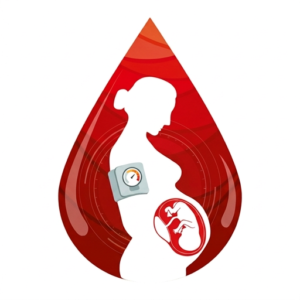
Do You Know Preeclampsia?
Preeclampsia is a pregnancy complication characterized by high blood pressure and signs of damage to another organ system, most often the liver and kidneys.
Preeclampsia usually begins after the 20th week of pregnancy or after giving birth.
Left untreated, preeclampsia can lead to serious — even fatal — complications for both you and your baby.
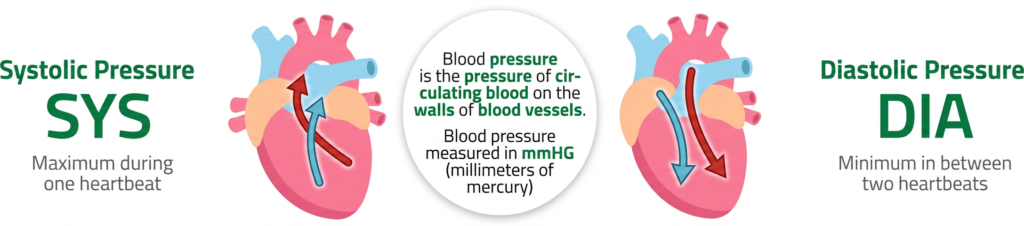
Systolic Pressure & Diastolic Pressure
Blood Pressure Classification
The traffic-color scale on Medisana Blood Pressure Monitor indicates your blood pressure level which is very easy to understand.
| BLOOD PRESSURE CATEGORY | SYSTOLIC mm Hg (top/upper number) | And / Or | DIASTOLIC mm Hg (bottom/lower number) |
|---|---|---|---|
| NORMAL | LESS THAN 120 | and | LESS THAN 80 |
| ELEVATED | 120 – 129 | and | LESS THAN 80 |
| STAGE 1 HYPERTENSION (High Blood Pressure) | 130 – 139 | or | 80 – 89 |
| STAGE 2 HYPERTENSION (High Blood Pressure) | 140 OR HIGHER | or | 90 OR HIGHER |
| SEVERE HYPERTENSION | HIGHER THAN 180 | and/or | HIGHER THAN 120 |
| HYPERTENSIVE EMERGENCY | HIGHER THAN 180 | and/or | and/or |
More About Blood Pressure
According to World Health Organization, if your numbers are 140/90 or higher, you probably have High Blood Pressure.
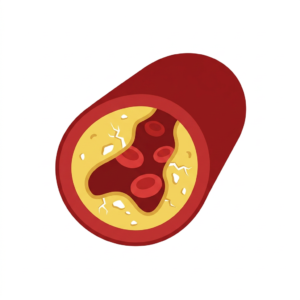
Hypertension can cause serious damage to health. It can harden arteries and reduce the flow of blood and oxygen into the heart, causing chest pain (angina), heart failure, and heart attack. High blood pressure may rupture or block arteries, supply blood and oxygen to the brain, and cause a stroke.
⚠️High blood pressure is a “Silent Killer“!
You may not feel that anything is wrong, but high blood pressure could be quietly causing damage that can threaten your health.
The best prevention is knowing your numbers and making changes that matter in order to prevent and manage high blood pressure.
Different Types of Hypertension
Primary Hypertension
About 90% of patients with hypertension are primary hypertension, the cause of which is unknown, generally related to genetics, mental stress and obesity.
Secondary Hypertension
Mainly caused by other diseases or changes in the body, such as kidney disease and endocrine disorders.
Coat Hypertension
More commonly known as white coat syndrome, is a phenomenon in which people exhibit a blood pressure level above the normal range, in a clinical setting, although they do not exhibit it in other settings.
How to Measure Blood Pressure Correctly with an Upper Arm Blood Pressure Monitor?
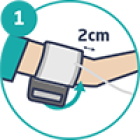
Step 1
Slip the cuff over the bare left upper arm just above the elbow approx. 2 cm distance. Ensure the cuff is not too tight and space inside should be 2-fingers wide.
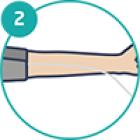
Step 2
The tube should run along the center of the inner arm towards the palm of the hand.
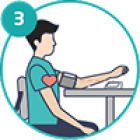
Step 3
Relax your body and rest your arm lightly on a table. Do not move or talk during measurement. Measurement takes place at heart level.

Step 4
Use the same arm for measurement consistently — usually the left arm.
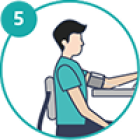
Step 5
Make sure you are in a comfortable, relaxed position. Do not tighten arm muscles during measurement — any pressure can result in an incorrect reading.
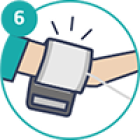
Step 6
If the cuff is too loose or not adhered well, it will cause erroneous readings.
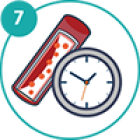
Step 7
If measurements are taken continuously, separate them by several minutes to allow accumulated blood to flow away.